What does a winning product actually mean?
A winning product is one that attracts customers and generates a sustainable margin in your own business. Product research helps find candidates; your offer, acquisition costs and fulfilment determine whether they work for you.
Choose a target country, customer need, price range and realistic delivery service before browsing. A popular product elsewhere may depend on a seasonal trend or offer that does not translate to your market.
1. Search for ads addressing a specific need
Open the Meta Ad Library, select your target country and search for a product category, customer problem or advertiser. Try product names and phrases customers use in the local language. Our Facebook Ad Library guide explains the starting steps.
In Ads Bench, start with active ads and narrow the country and format. Build a relevant selection before sorting by volume. An active status does not reveal how much an advertiser is spending.
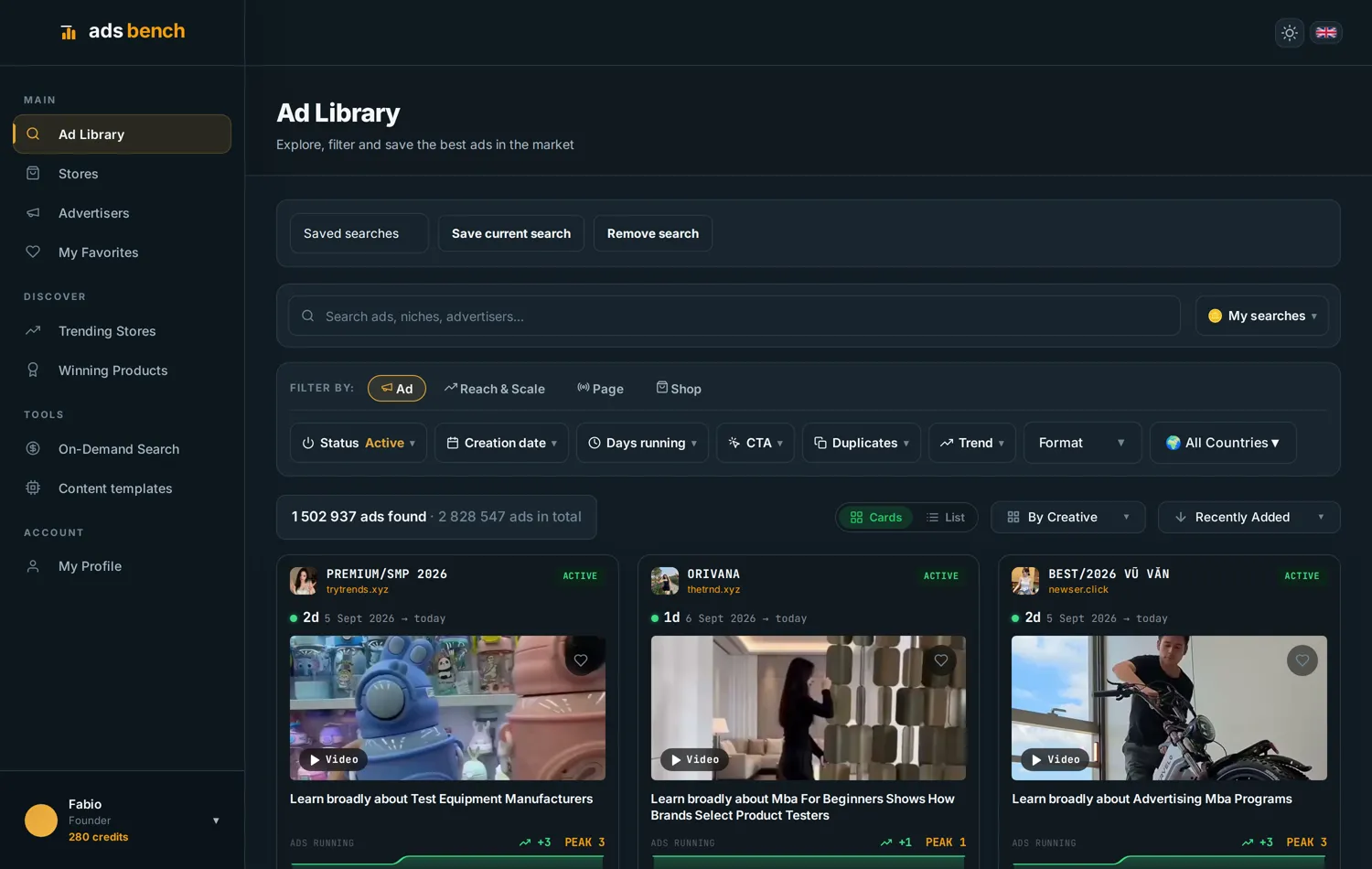
2. Compare creative reuse, duration and recent activity
Group by creative and sort by ad count to identify images or videos used repeatedly. A creative that a store keeps duplicating is usually a creative that sells: few stores multiply an ad that loses money. Just check that the copies are not short tests or versions for other countries.
Check how long the creative has been observed and whether new ads are appearing. Continued reuse is worth investigating, but an old ad may have very little spend. Read several signals together and check when the data was last observed.
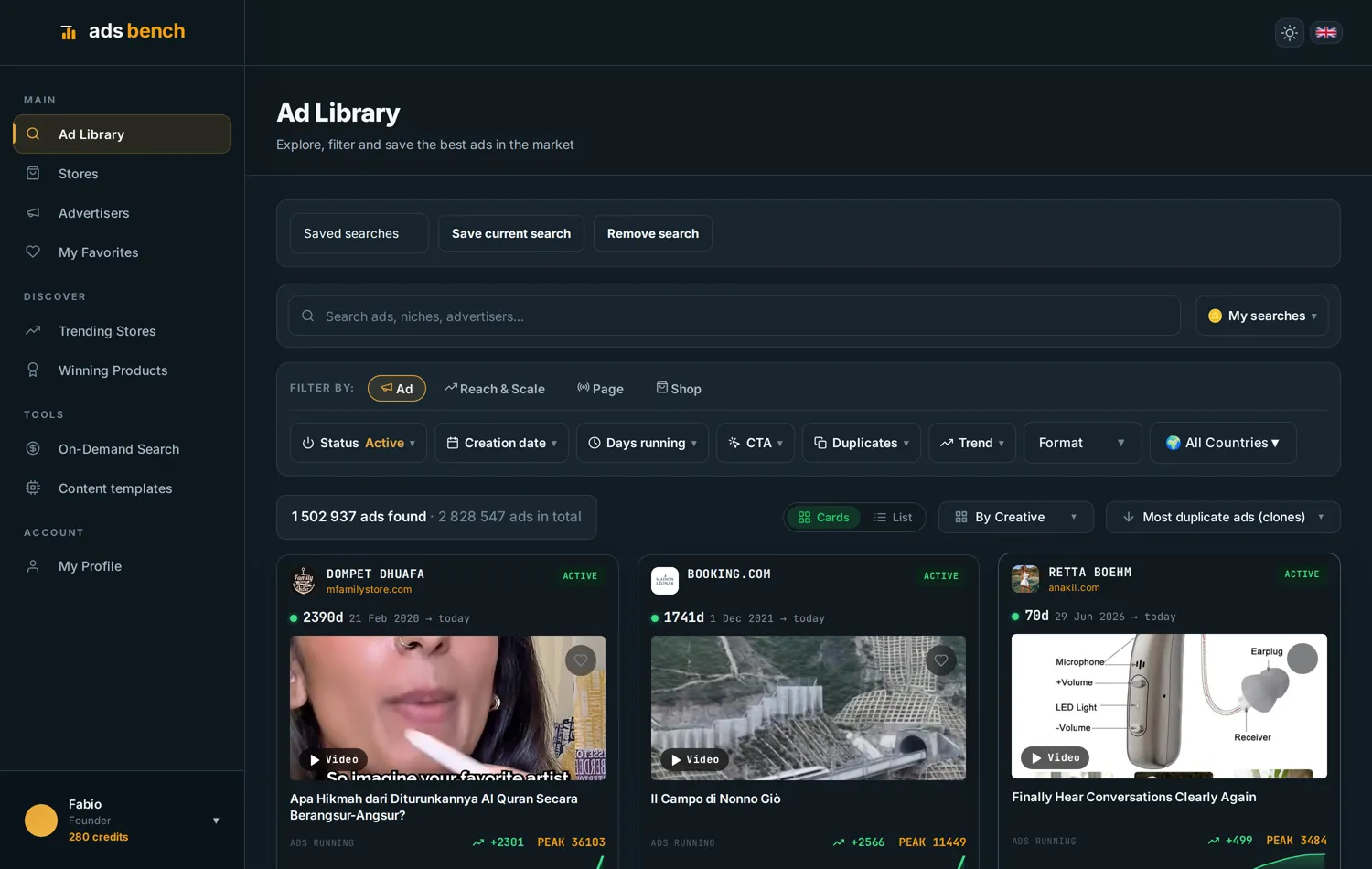
3. Review the store, offer and creative angle
Open the ad and visit its destination. Record the customer problem, product demonstration, price, bundle and delivery terms. An appealing video attached to a weak offer may be a poor opportunity.
Where available, inspect the linked store and compare its other ads and products. Separate direct competitors from marketplaces and large brands. Learn from the sales argument, then create your own materials and test your own offer.
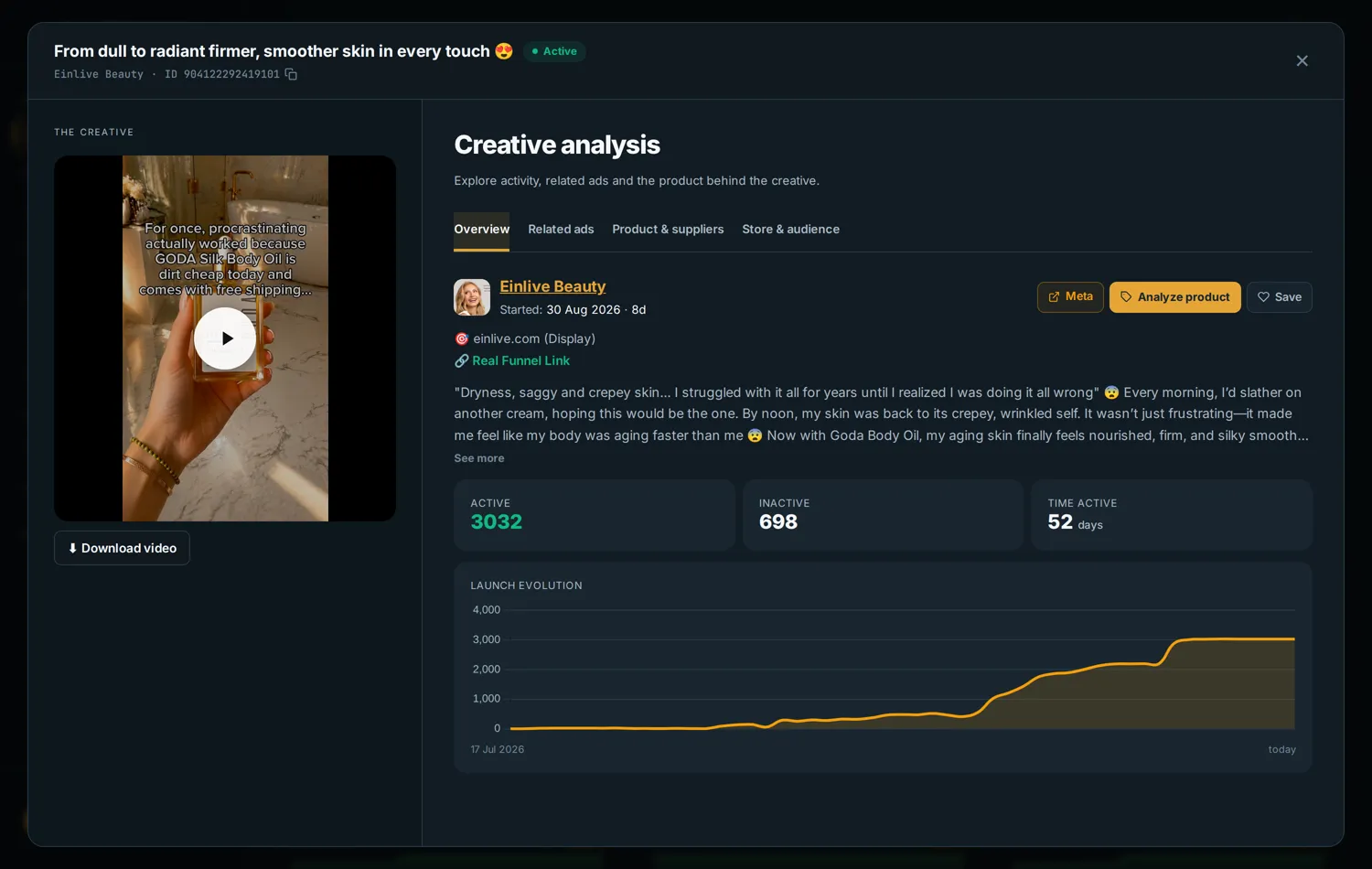
4. Verify suppliers and work out the costs
Image search helps find similar items. Compare variants, materials, dimensions, packaging, minimum quantities and shipping before treating a match as the same product. Order a sample and confirm delivery to your market.
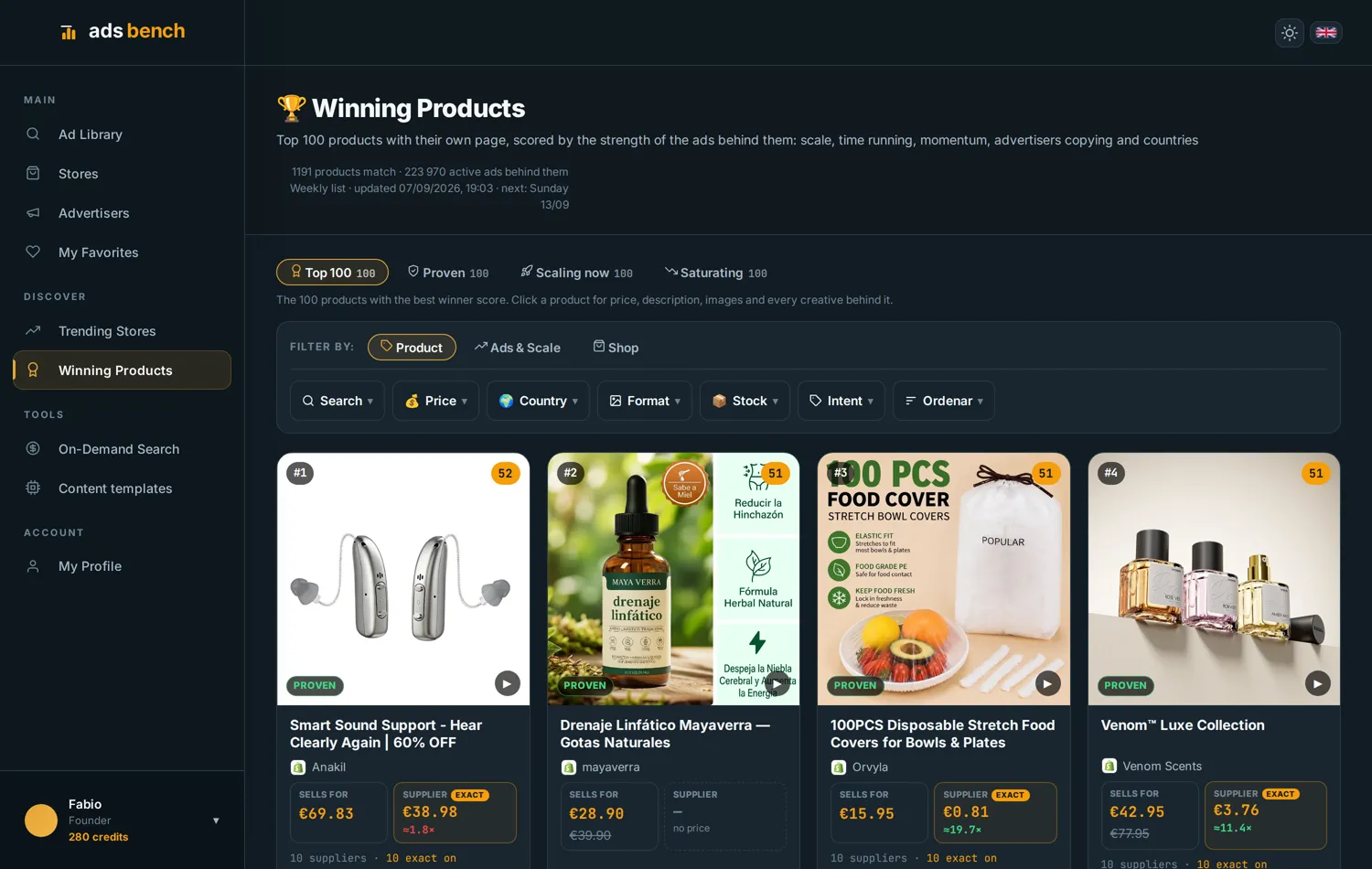
The screenshot shows a €15.95 retail listing beside a €0.81 supplier offer. The €15.14 difference is a gap between displayed prices, not profit or a guaranteed quote. Prices and conditions can change.
To assess your acquisition budget, start with net revenue per order and subtract the product, shipping, fulfilment, payment fees and an allowance for returns and support. What remains must still cover advertising, fixed costs and your target profit.
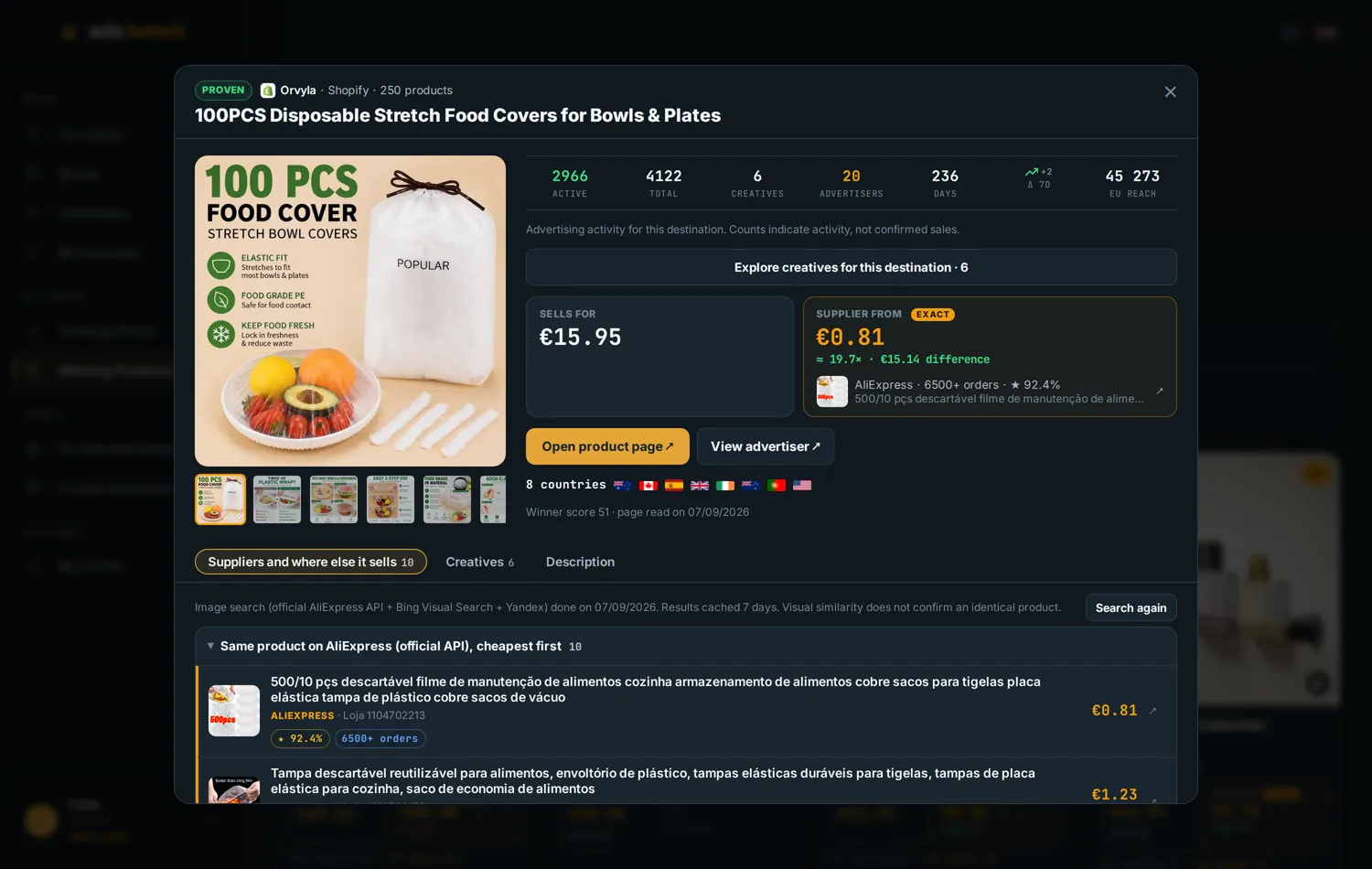
5. Choose a test and set decision criteria
Compare candidates on customer need, offer differentiation, total cost, delivery time, competition and sample quality. Set aside products whose quality or fulfilment you cannot verify.
The Ads Bench product ranking helps surface candidates from observed advertising activity. Use it as a starting point and inspect the underlying details. Set a test budget in advance and measure purchases, costs and returns in your own store.
Check saturation before choosing your test
After shortlisting products, compare independent stores in the same market, equivalent variants and delivery promises. Use our dropshipping product saturation checklist, then compare suppliers by image.
Product research FAQs
Can I start for free? Yes. Use the official library to find ads and manually compare stores, offers and suppliers. An analysis tool helps organise and compare the observations.
Do more ads mean more sales? No. Ad count describes observed advertising activity. Sales and profitability require information that the library does not provide for ordinary commercial ads.
How do I assess competition? Compare offers aimed at the same audience and country. Similar photos across stores may suggest shared sourcing or competition, but do not measure saturation by themselves. See how to assess a potential dropshipping store.
Examples: Ads Bench screenshots from 7-8 September 2026. Figures illustrate the interface and may change; coverage does not represent the whole market.