What is dropshipping?
In dropshipping, a store takes the order and a supplier ships it to the customer without the store holding that inventory. The supplier may be local or international. A business may also combine its own inventory with third-party fulfilment.
Use this guide to research competitors before choosing your own product and offer. Record what can be verified and what remains uncertain. Delivery promises, bundles and product presentation are useful regardless of the store’s fulfilment model.
1. Read the shipping terms and ask about dispatch
Find the shipping policy and separate processing time from transit time. Look for references to multiple warehouses, split shipments or direct dispatch by partners. These suggest distributed fulfilment, which is also used outside dropshipping.
Ask where your chosen variant ships from and the expected delivery time to your postcode. Keep the reply. A long delivery estimate alone may reflect a preorder, made-to-order production or international transport.
2. Compare photos and specifications with supplier listings
Search the product image with Google Images or a marketplace. Compare dimensions, materials, accessories, variants and packaging. Photos may be shared among resellers or reused without permission.
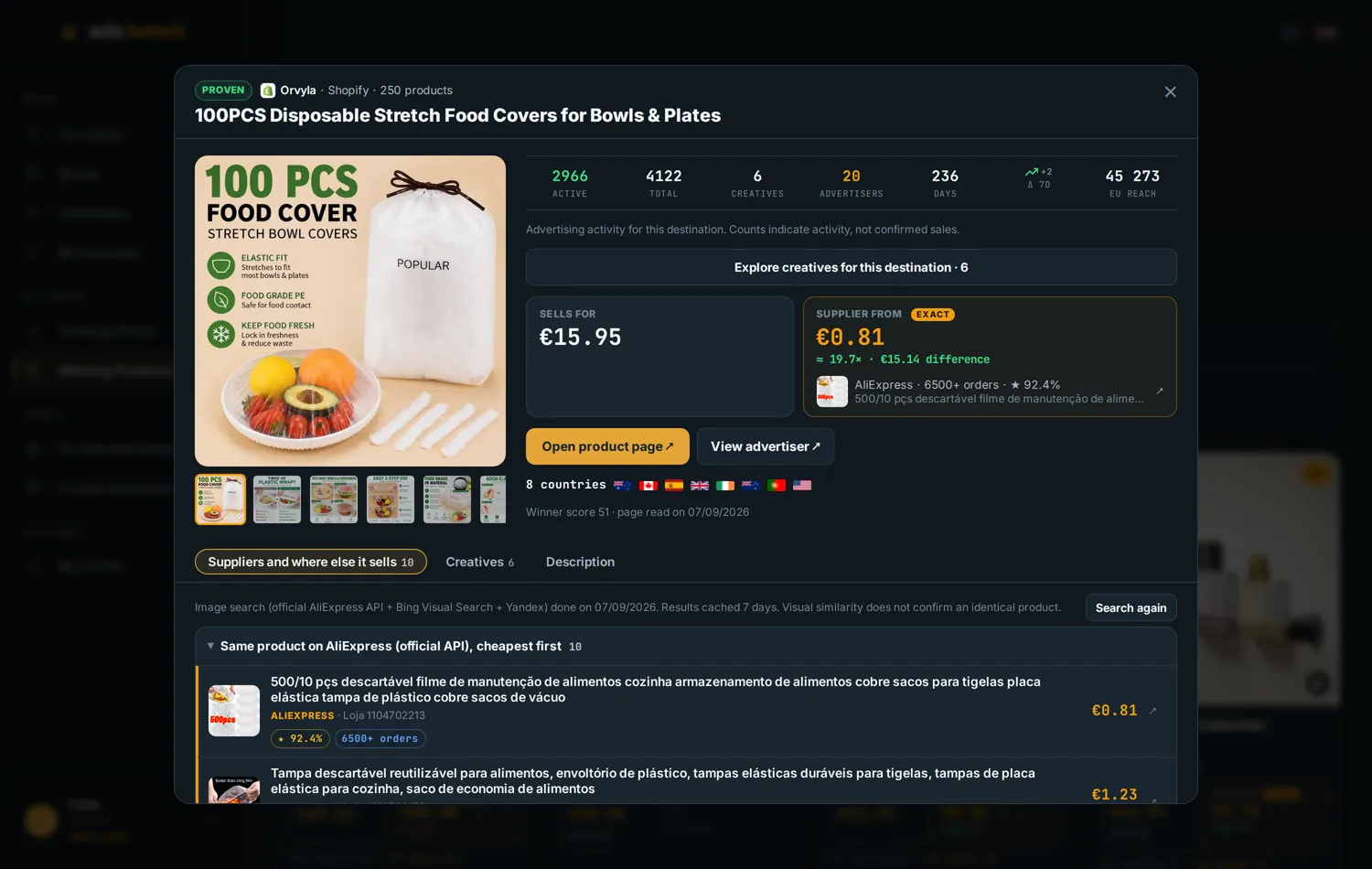
The Ads Bench screenshot places a €15.95 retail offer beside a €0.81 supplier result. The difference is worth investigating, but it does not confirm that the store buys from that supplier or that the items are equivalent. Check shipping and the conditions attached to the displayed price.
3. Check seller information and return arrangements
Look for the business identity, contact details and return policy. Ask which return address applies to your order, who pays for postage and how product problems are handled. Clear answers help you assess the purchase regardless of fulfilment model.
An overseas supplier does not automatically imply a specific delivery time or an impractical return. Verify the actual arrangements rather than assuming that all stores operate alike.
4. Treat catalogue and advertising patterns as context
A small catalogue with many ads may indicate a focused offer, but it also fits a brand holding its own stock. A large catalogue may reflect reselling, a marketplace or imported product data. None of these patterns identifies dropshipping on its own.
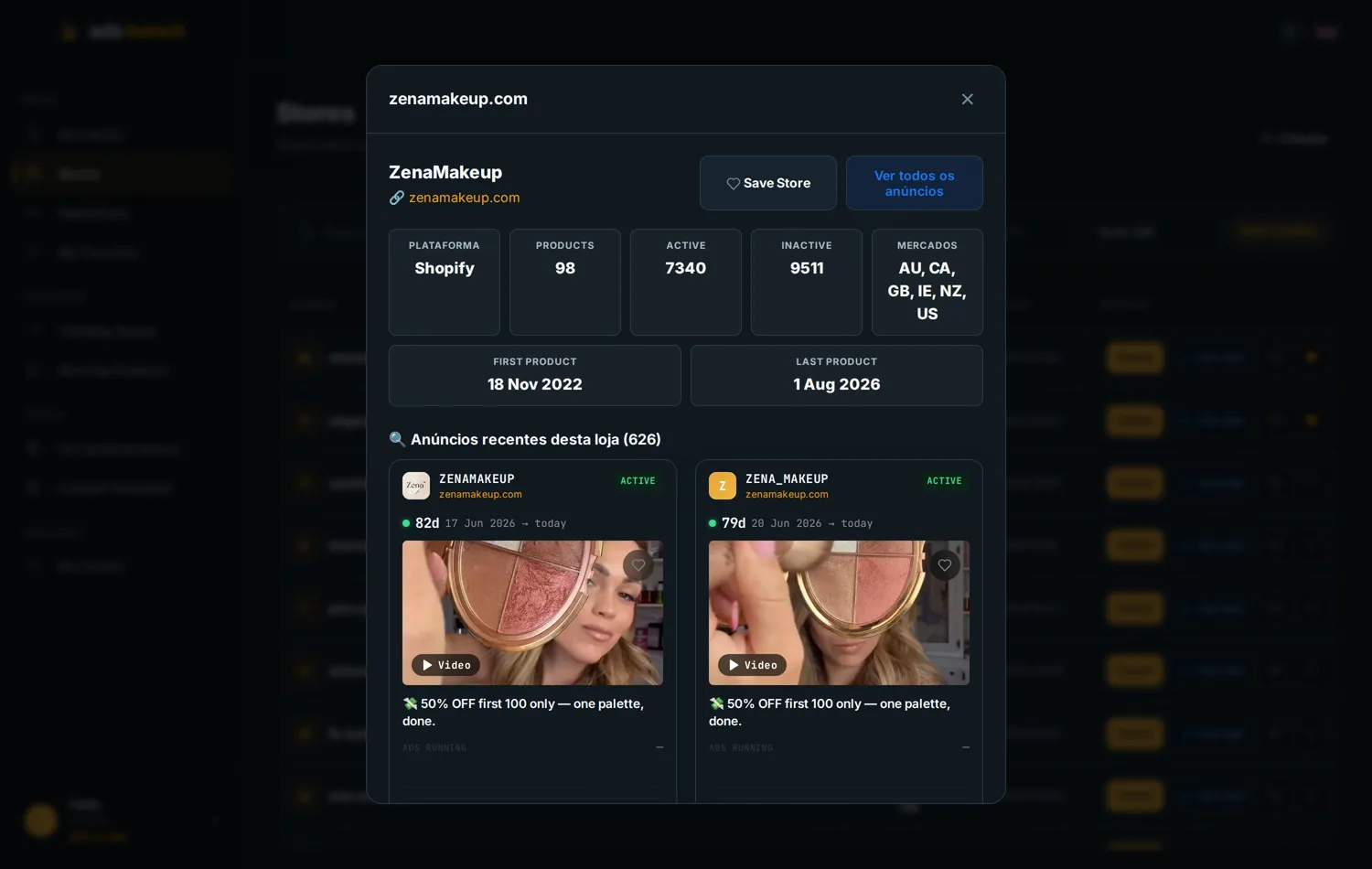
Ads Bench store details bring together available platform, product and advertising data. The example with 98 products and 7,340 active ads describes catalogue size and observed activity; it does not reveal the company’s warehouses or contracts.
5. Interpret platform and dates carefully
Shopify and WooCommerce serve businesses using different distribution models. The platform describes the store’s technology, not where its products come from.
The first observed product or collected ad is not necessarily the business’s founding date. Catalogues can be migrated, products republished and data collection started long after a store opened. Use these dates to understand coverage.
What can you conclude after these checks?
If the store confirms direct shipping from a supplier, you have specific information about its operation. If you found only shared images, different prices and many ads, you have a hypothesis that needs confirmation.
Identical photos across stores may reflect shared sourcing, authorised distributors or reused materials. They do not prove fraud or rule out a private-label brand. Base a purchase decision on the offer, seller and verifiable terms.
Turn store research into a dropshipping decision
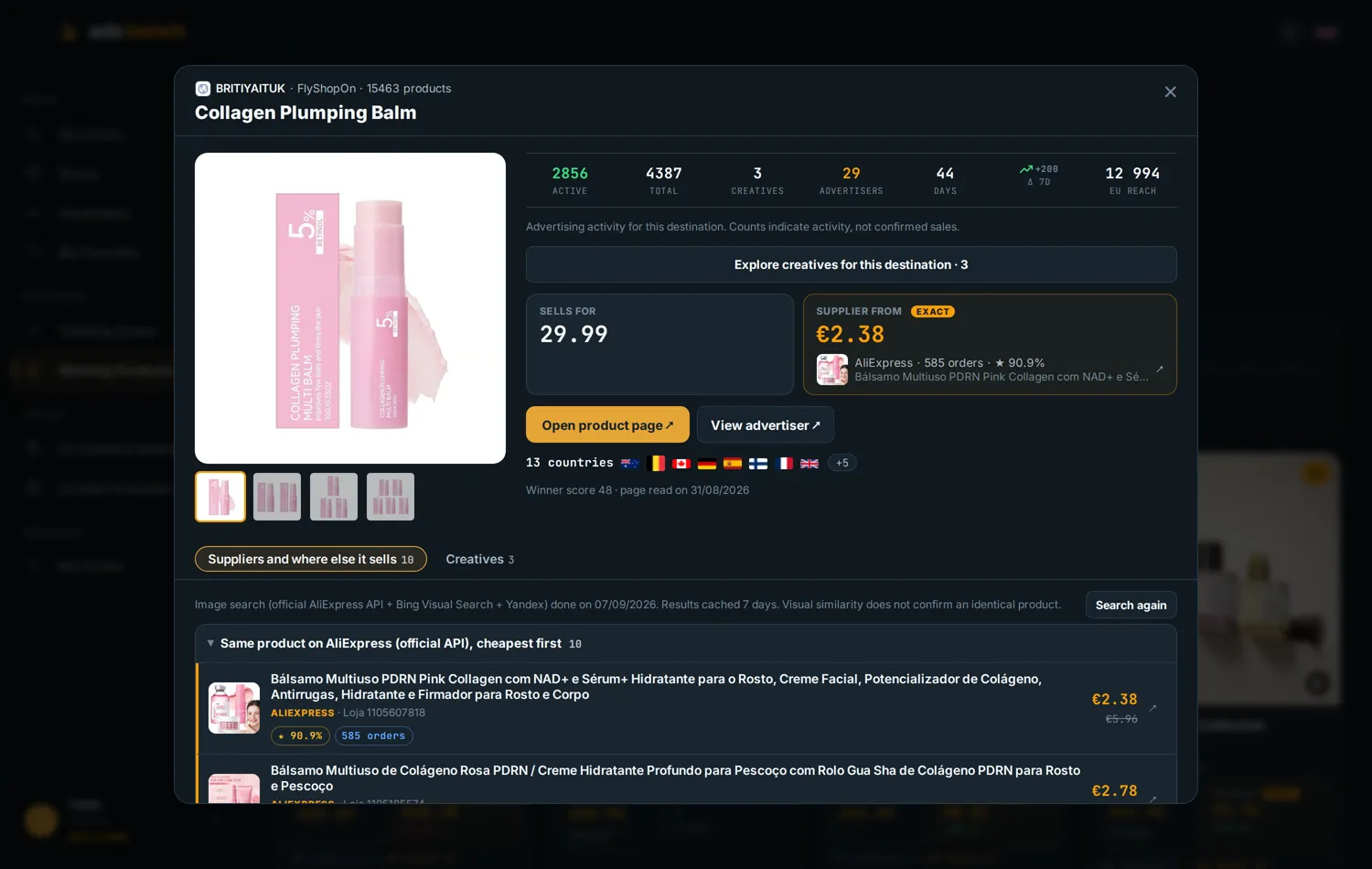
Compare three stores serving the same country. Record the exact variant, delivered price, delivery promise and demonstration. Identify a difference you can actually deliver.
If several stores sell the same item, use our product saturation checklist before choosing a test.
Example: what to record from a store detail page
The screenshot in this guide shows 98 products and 7,340 active ads at the time of capture. Record those as historical observations with the domain and date; do not treat them as current figures or proof of the fulfilment model.
Create three columns: confirmed on the store, observed in advertising and still to verify. Put published prices and terms in the first, creatives and associated pages in the second, and the actual shipping origin in the third when it is unconfirmed.
To choose a product, compare the same variant across three stores delivering to the same country. Continue with the saturation guide to assess competing offers.
Dropshipping store FAQs
Does dropshipping mean a scam? No. The shipping model alone does not determine whether a seller is trustworthy. Check the business identity, offer and purchase terms.
Does a large price gap prove dropshipping? No. Retail pricing can include shipping, service, advertising and other costs; the cheaper listing may be a different variant.
Can this help me choose products to sell? Yes, as initial research. Continue with the product research guide and learn to compare stores’ advertising activity.
Examples: Ads Bench screenshots from 7-8 September 2026. Figures illustrate the interface and may change; coverage does not represent the whole market.